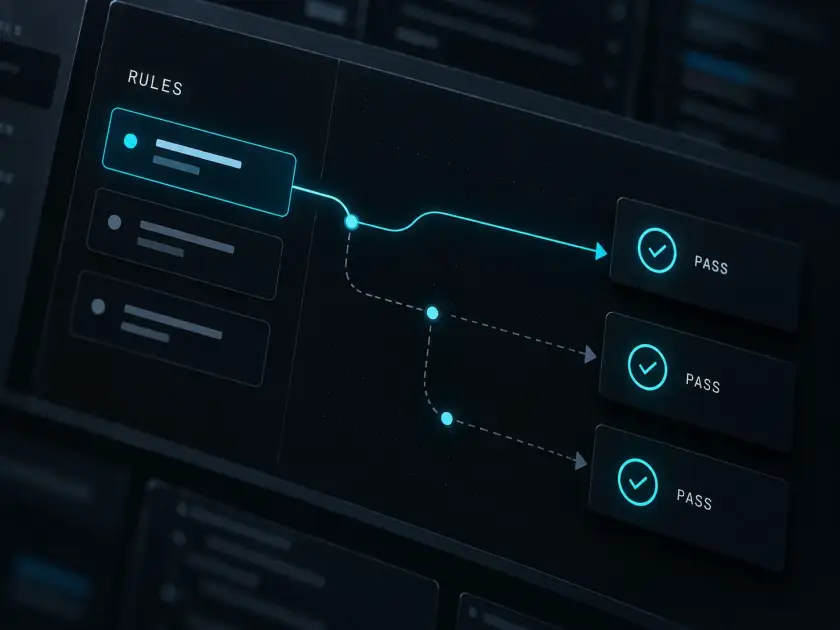
A decision log your next developer will thank you for
Code shows what a system does. Only a decision log remembers why.
Every product carries decisions that made sense at the time: a library chosen for a client's hosting, a shortcut taken for a launch date, a rule added for one large customer. Months later, nobody remembers why, and every change near them becomes a guess.
Keep it short
A useful entry fits on a screen: the date, the decision, the options considered, why this one won and when to look at it again. Writing it takes ten minutes. Rediscovering it can take days.
Keep it close to the code
Decisions that live in a chat thread disappear. Kept in the repository, next to the code they explain, they move with it and turn up when someone needs them.
Revisit, don't rewrite
A decision log is not a list of rules. When circumstances change, add a new entry that replaces the old one, and say why. The history is the valuable part.
The next developer to join your product, whether in a month or in five years, will start with the context they need instead of the questions nobody can answer.
Written by the OneSyntax team